
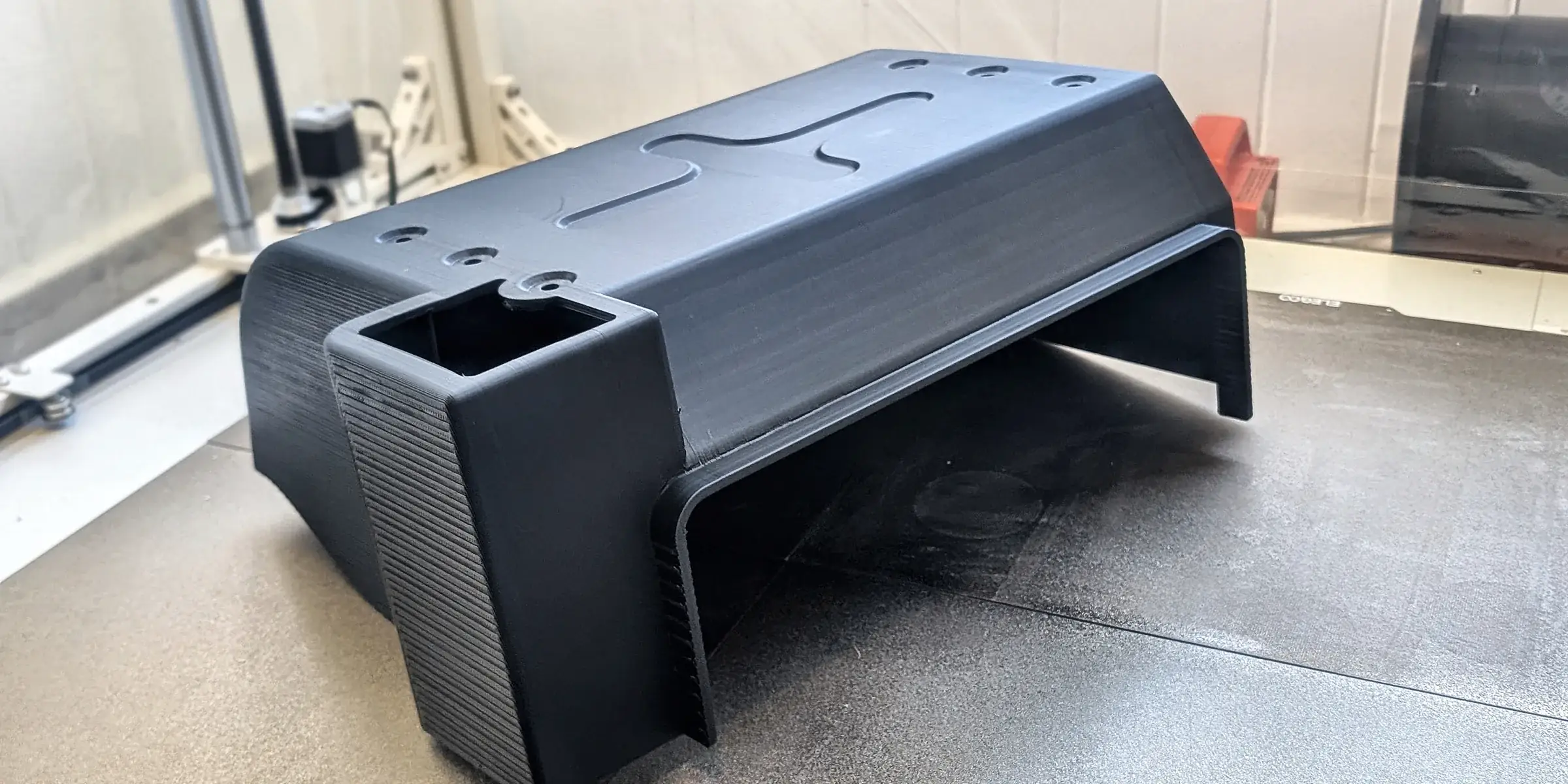
Engineering-grade 3D printing materials in Brisbane
We print polycarbonate (PC), flame-retardant PC (PC FR), carbon-fibre blends (PLA-CF, PETG-CF, PC-CF, ASA-CF), nylon glass-fibre (PA6-GF), nylon carbon-fibre (PA6-CF), high-temperature nylon carbon-fibre (PAHT-CF) and PLA Aero, all on our Bambu Lab H2C and H2D printers.
- PC and PC FR
- Carbon-fibre and glass-fibre
- PA6-CF and PAHT-CF nylon
- PLA Aero
- one-off fibre setup fee per job
- $90
- Bambu Lab printers that run them
- H2C, H2D
- typical tolerance
- ±0.2 mm
- mm single piece
- 350 × 320 × 325
Engineering materials compared
Each engineering material trades something for its strength, heat tolerance or weight. This table shows what each one is for, what to watch for, and the one-off setup fee per job.
| Material | What it's for | Watch-outs | Setup fee |
|---|---|---|---|
| Polycarbonate (PC) | Stiff, tough parts that see heat or knocks: enclosures near motors or electronics, brackets under load | Absorbs moisture, so it is dried before printing. Large flat parts can warp. | $15 |
| Flame-retardant PC (PC FR) | Housings and enclosures where a flame-retardant material is specified | Flame retardancy is a property of the filament. We don't test or certify finished parts. Dried before printing. | $15 |
| Carbon-fibre blends (PLA-CF, PETG-CF, PC-CF, ASA-CF) | Stiffness and dimensional stability: the part holds its shape and warps less than the base material. ASA-CF for outdoor parts. | Abrasive. Matte, slightly rough surface. Less impact toughness than the unfilled base material. | $90 |
| Nylon glass-fibre (PA6-GF) | Tough, stiff nylon parts that take knocks: jigs, fixtures, housings | Absorbs moisture quickly, so it is dried before every print. Abrasive. Matte surface. | $90 |
| Nylon carbon-fibre (PA6-CF) | Gears, wear parts, clips that flex, brackets that take heat and shock | Absorbs moisture quickly, so it is dried before every print and stored sealed. Abrasive. Matte surface. | $90 |
| High-temperature nylon carbon-fibre (PAHT-CF) | A nylon 12 carbon-fibre blend for parts that run hotter than PA6-CF suits, or sit in damp conditions | Absorbs less moisture than PA6, but is still dried before printing. Abrasive. Matte surface. | $90 |
| PLA Aero | Foaming, lightweight PLA for drone and aeromodelling parts and other weight-critical components | Low density means lower strength. Softens at the same low temperatures as PLA. Calibrated for each job. | $90 |
For PLA, PETG, ABS, ASA and TPU, see our 3D printing materials guide.
How we handle engineering materials
Engineering materials need preparation before the printer starts, and we do it on every job.
Dry
Moisture-sensitive filaments, including PC and the nylons, are dried before printing. Nylons are stored sealed.
Condition
Each material is conditioned and calibrated for the job. PLA Aero needs extensive calibration for each job.
Hand-feed
Fibre-filled filament is abrasive, so it is hand-fed through a separate system.
Print
Engineering materials print on our Bambu Lab H2C and H2D, with a typical tolerance of ±0.2 mm.
A single piece can be up to about 350 × 320 × 325 mm. Bigger parts are split into sections with designed connectors.
Where engineering materials earn their keep
Engineering materials pay off on parts that carry load, sit near heat, wear against other parts or need to be light.
- Enclosures and housings that sit near motors, electronics or other heat sources
- Jigs and fixtures for production lines and workshops
- Brackets and mounts under load
- Gears, bushings, clips and wear parts that rub, slide or flex
- Outdoor parts that face the Queensland sun (ASA-CF)
- Electrical housings where a flame-retardant material is specified (PC FR)
- Drone and aeromodelling components (PLA Aero)
Most of this work arrives as engineering prototypes.
★★★★★
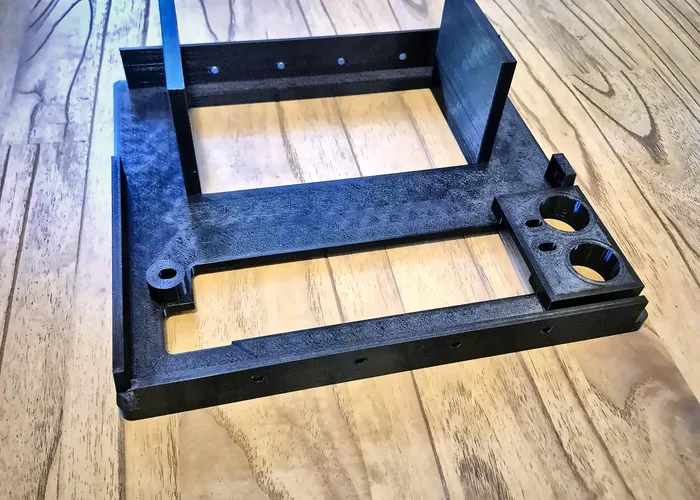
"Great experience dealing with Brisbane 3D Printing; they are extremely responsive with a quick turnaround time. I needed a dual-T mount adapter and they produced the print that both works perfectly, and holds up strength-wise with the material that they advised."
When to step up from PETG or ASA
Stay with PETG or ASA if they do the job. PETG has no setup fee and costs less per gram than any engineering material. Step up to an engineering material when the part has a specific demand they can't meet.
Heat or impact
Near a motor, inside electronics, or taking knocks. Choose PC or PC-CF.
Stiffness
The part must not flex or creep under load. Choose a carbon-fibre blend.
Wear and repeated flexing
Gears, clips, sliding parts. Choose PA6-CF or PA6-GF.
Heat and damp together
Choose PAHT-CF.
Flame retardancy specified
Choose PC FR.
Weight
Choose PLA Aero.
If you're not sure, tell us where the part lives, what it carries and how hot it gets, and we'll recommend one.
Engineering material pricing
Engineering materials are quoted on print time and material weight, plus a one-off setup fee per job, not per part. Setup fees, including GST:
PC and PC FR
For drying.
Carbon-fibre and glass-fibre reinforced
PLA-CF, PETG-CF, PC-CF, ASA-CF, PA6-GF, PA6-CF, PAHT-CF. Fibre-filled filament is hand-fed through a separate system.
PLA Aero
For the calibration each job needs.
The material is billed on weight and costs more per gram than PLA or PETG. The minimum order is $50 including GST. Every quote is itemised, and the full list is on our 3D printing prices page.
Lead time and limits
Lead time
Engineering-material jobs take longer than PLA or PETG jobs, and we give you a timeline with the quote. Drying, conditioning and calibration happen before the printer starts, and some filaments are ordered in for the job.
What we don't print
We print FDM only: no resin, no metal and no injection moulding. If your part needs another process, we'll say so when we see the file. Our large-format printer runs PLA, PLA+ and PETG only, so engineering materials are limited to the single-piece size above.
Engineering material questions
Which engineering materials do you print?
We print polycarbonate (PC), flame-retardant PC (PC FR), carbon-fibre blends (PLA-CF, PETG-CF, PC-CF, ASA-CF), nylon glass-fibre (PA6-GF), nylon carbon-fibre (PA6-CF), high-temperature nylon carbon-fibre (PAHT-CF) and PLA Aero. They all run on our Bambu Lab H2C and H2D printers.
When do I need polycarbonate instead of PETG?
Choose polycarbonate when the part sees heat or knocks that PETG won't take. Typical cases are enclosures near motors or electronics and brackets under load. PC is dried before printing, which is why it carries a $15 setup fee.
What do carbon-fibre and glass-fibre blends add?
Fibre blends add stiffness and dimensional stability: the part holds its shape under load and warps less than the base material. The trade-offs are a matte, slightly rough surface and less impact toughness. The filament is abrasive and hand-fed through a separate system, so these jobs carry a $90 setup fee.
What is the difference between PA6-CF and PAHT-CF?
PAHT-CF is a nylon 12 carbon-fibre blend made for higher temperatures, and it absorbs less moisture than PA6-CF. PA6-CF suits most tough, wear-resistant parts. Both are dried before printing and carry the $90 fibre setup fee.
How much do engineering materials cost to print?
Engineering materials are quoted on print time and material weight, plus a one-off setup fee per job: $15 for PC and PC FR, and $90 for fibre-reinforced materials and PLA Aero. The material costs more per gram than PLA or PETG. The full list is on our prices page.
How long do engineering-material jobs take?
They take longer than PLA or PETG jobs, and we give you a timeline with the quote. Drying, conditioning and calibration happen before printing starts, and some filaments are ordered in for the job.
Tell us the application
Send the file and tell us where the part lives, what it carries and how hot it gets. We'll recommend a material and itemise the quote.
Send your files